Most couples book a 360 photo booth because they saw a video on Instagram. That is perfectly fine — but between that video and your own reception there are four practical things nobody tells you in advance, and they decide whether the booth will actually work or just stand in a corner.
1. The space: three by three, not "somewhere over there"
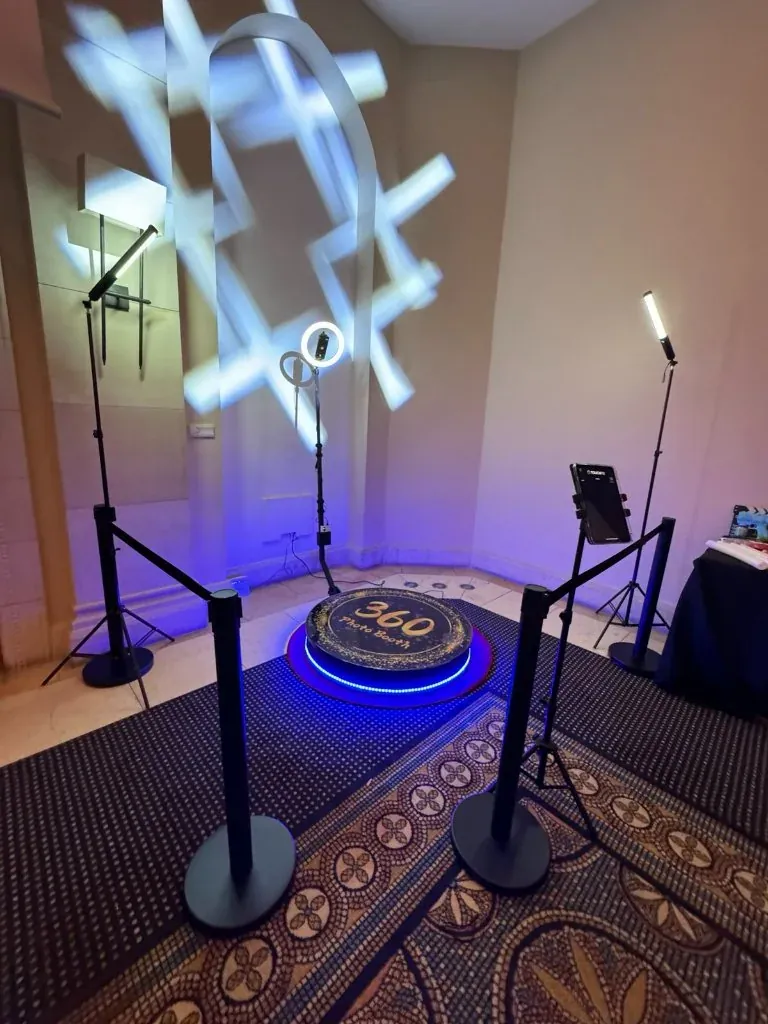
The platform itself is about a metre across. The arm, though, spins around it and needs a clear circle. In practice we want three by three metres clear, with no tables, columns or branches overhead. Height: two and a half metres is enough, but under a low marquee or in a room with hanging light fittings the arm cannot complete a full circle.
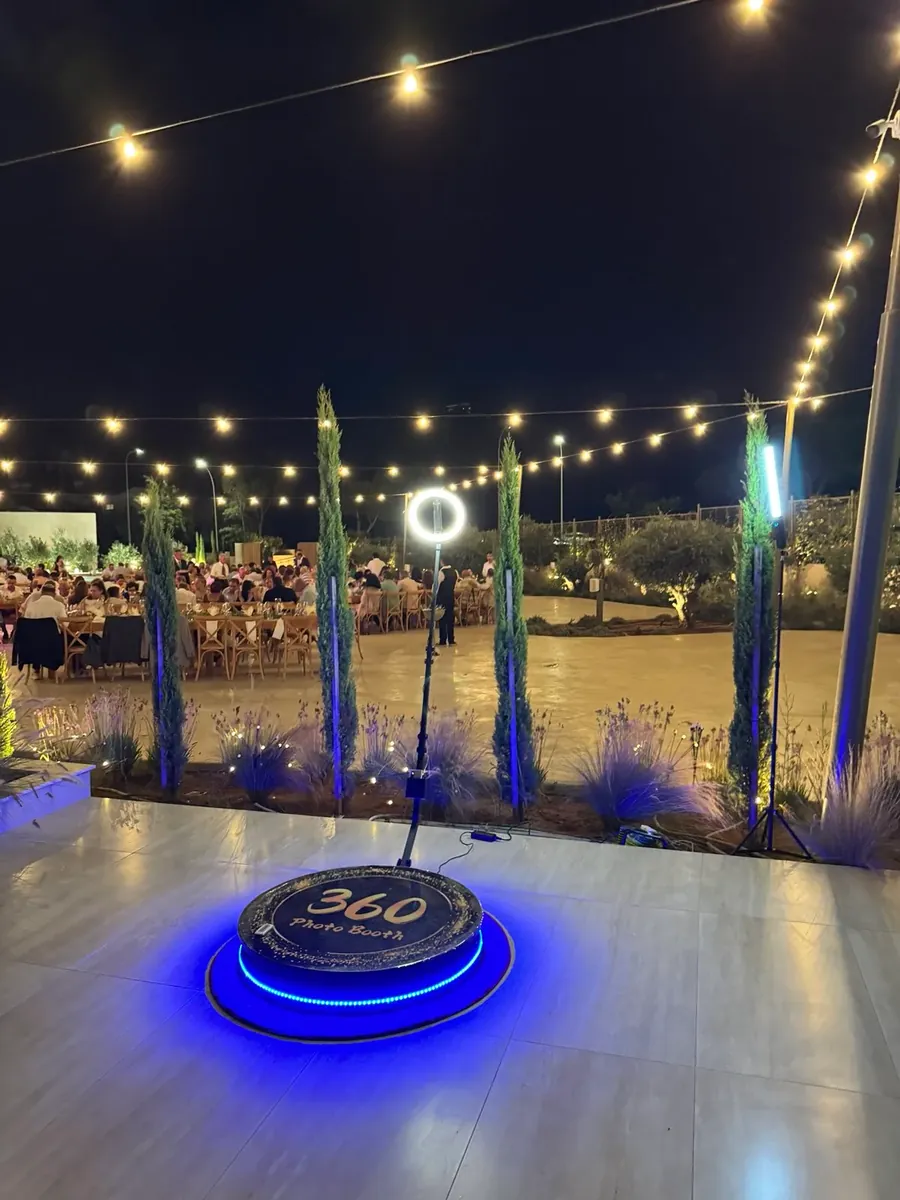
The most common mistake is not the space itself — it is the position. A booth tucked away at the edge of the room, behind the bar, stays empty. That same booth beside the dance floor forms a queue. Guests go where there is already movement.
2. Power: one socket, but a dedicated one
The booth needs one ordinary 220V socket within ten metres. The issue is not how much power it draws — it is what else is hanging off the same line. At venues where the same line carries the sound system and the dance-floor lighting, a voltage drop can knock the booth out halfway through the night. We flag it to the venue manager beforehand and they give us a separate line; it takes two minutes and it saves the one moment that never comes round again.
3. How many hours you actually need
The standard package is three hours and for most weddings that is right. The reason is simple: guests do not use the booth all night. There are two waves — after the meal, and once the dance floor opens. In between, the booth goes quiet.
- Up to 120 guests: three hours is comfortably enough.
- Over 200: either four hours or a second booth — otherwise the queue stretches to fifteen minutes and people walk away.
- If you want the booth open as guests arrive, allow an extra hour; that hour is not "use", it is a welcome.
4. What makes the difference to the final video
The lighting. A 360 in a dark corner produces grainy, grey videos; the same booth with proper light produces exactly what you saw on Instagram. That is why we bring our own lighting and never rely on the venue's. The second thing is the operator: someone telling guests what to do gets you twice as many usable videos as a booth left to run on its own.
A 360 booth with no light and no operator is not a cheaper 360 booth. It is a different product.
The questions worth asking every supplier
- Is an operator included for the whole time, or is it set up and left?
- Do you bring your own lighting?
- How long before the event do you arrive to set up, and does that count within my hours?
- How and when do I get the videos — the same night on my phone, or via a link afterwards?
- What happens if it rains and the venue is outdoors?
If someone struggles to answer these five clearly, it is not a question of price — it is a question of experience.
See exactly what our 360 includes on the Services page, or build your own combination in the Event Creator to see the package price live.
Frequently asked questions
How much space does a 360 photo booth need?
About 3×3 metres clear (the platform is ~1m but the arm spins around it), with at least 2.5m of clear height. No tables, columns or hanging light fittings overhead.
What power does it need?
One ordinary 220V socket within 10m — ideally its own line, not shared with the sound system and dance-floor lighting, so it does not suffer a voltage drop.
How many hours should I book?
Three hours is enough for weddings of up to ~120 people. Over 200 guests you need four hours or a second booth, otherwise the queue grows and people walk away.
What makes the difference to the final video?
The lighting and the operator. A 360 in a dark corner produces grey videos; with proper lighting and an operator guiding guests you get twice as many usable videos. Ask for an operator to be included for the whole time.